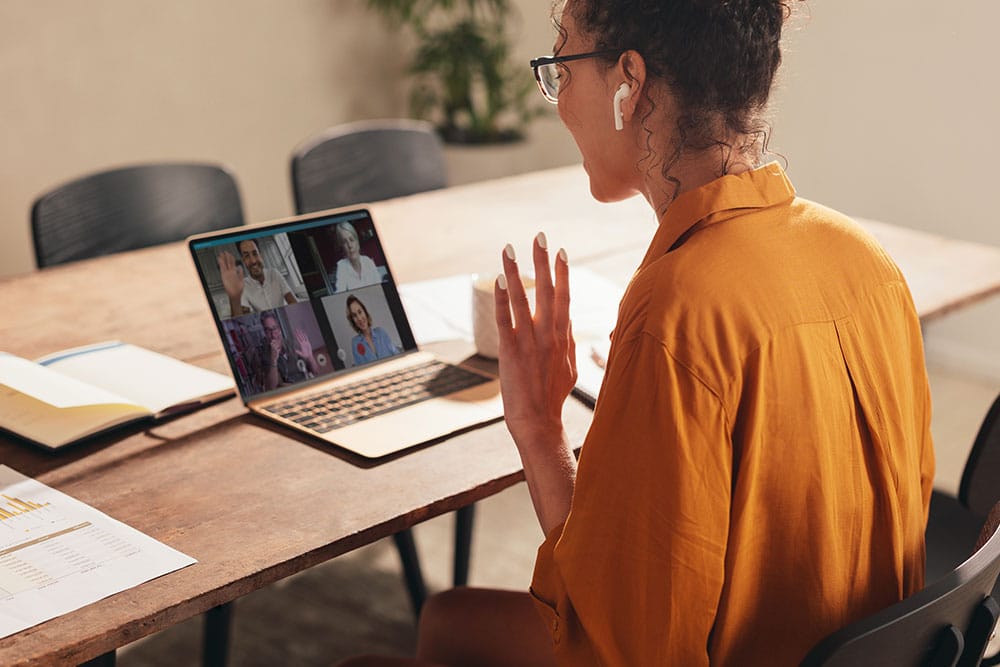
According to the ONS, between September 2022 and January 2023 16% of employed adults said they worked from home only, and 28% reported working from home and from their place of work.
A rise in remote and hybrid working has impacted the way we work across how we run meetings, workshops and line manage teams. While basic management principles still apply, an increase in working from home can bring positive elements as well as some challenges.
Challenges
A key challenge in working remotely is lack of social interaction with colleagues. In 2018, the HR Review stated that remote workers may be more likely to suffer from work related stress, anxiety or depression as “individuals may typically find themselves separated from normal communication channels and support mechanisms.” This may lead to an employee experiencing isolation and loneliness. It might be more difficult to track mental health issues in team members too, which could leave them going unnoticed.
Working remotely can also lead to communication becoming increasingly difficult. Things that you may have previously heard in the office, or conversations you may have been pulled into, may now be harder to keep track of. Communicating with your team may also bring challenges if working in different places where you may be more prone to things such as distractions in your home or internet connection issues.
If desk workers do not have the correct DSE setup when working from home this could lead to musculoskeletal health issues down the line. There may also be a drop in activity if staff are working from a room in their home instead of commuting to work or walking around an office building.
There may also be a fear of inequality, where those that are based at home worry they are missing out or being neglected compared to those working on-site. Other disadvantages listed on Parliament UK include increased work intensity, longer working hours and less promotion and learning opportunities.
Benefits
Mental Health UK state that “Flexible working has enabled people to re-shift their focus less on the professional working day and more on their personal lives.” Flexible working arrangements can support parents to do the school run or allow staff to see their GP or therapist without having to use their holiday.
ONS data from February 2022 showed that almost half of workers said hybrid working had improved their wellbeing. Mental Health UK also state it can help and attract talent, offering people a better work-life balance; ONS data showed 78% of those that worked from home in some form had an improved work-life balance.
Working from home can allow some people to focus without the distractions of a busy open-plan office. It can also save the business cost on things such as office space, and according to CIPD can help to reduce absence rates.
A small change in leadership style can therefore help reduce the impact of mental ill health in the team while maintaining levels of output while working from home.
There are clearly benefits and challenges for working remotely, and research on the impact will grow in the coming years. According to CIPD, initial research shows that hybrid working takes the best of both remote working and being based at work.
Ways to help manage a remote team
Identify ways to communicate effectively
Being based in the same building as colleagues makes it easier to have quick chats or face-to-face catch-ups ad hoc. That’s why it’s key to consider how you will communicate with your team remotely, to ensure that these touchpoints are not completely lost.
Aim to have more regular team meetings than you normally would if based in the same building as this will support social interaction, allow queries to be raised easily and frequently and help you to establish team goals and discuss difficulties as a collective.
In addition to this, leaders should schedule regular catch-ups with individual team members to continue building rapport and relationships on a personal level. Try to ask colleagues about their personal lives and interests (as you would do in the same building), so that it’s not always focused solely on work.
Have the right tools in place
Part of achieving good communication remotely is having the right technology in place to enable this. Use a variety of different methods, from establishing online ‘team chat’ groups where non-work conversation is encouraged, to video calling colleagues instead of simply sending an email.
Consider the demographics in your team when communicating too. For example, younger team members may need more regular communication than older team members; according to ONS “nearly one-third of 16-24 year olds in the UK (31%) reported some evidence of depression or anxiety in 2017 to 2018. This is up from the previous year (26%) and the same period five years earlier (26%). Also consider that some members of your team may not be used to or comfortable with newer technology that they haven’t used before. Consider what guidance and training you can put in place when introducing new processes and technology for communication.
Another tool you can use to help is an employee wellness action plan. These are designed to help an employee reflect and put in place appropriate actions to support their wellbeing. They can help to identify stressors, challenges as well as practical solutions. An employee can choose to use them as a tool with their line manager, or just keep them for personal use. Here is a mental wellbeing care plan we put together, the mental health charity Mind have also created a version.
Model a healthy work-life balance
While working from home can allow employees more autonomy in their working day, it can also lead to working longer hours. It can be very easy to check emails from bed or at the breakfast table, and these types of habits can have serious implications on work-life balance, stress and mental health in general.
For this reason, it’s important that the manager sets an example of the behaviours and culture expected from employees. For example, this can mean setting clear start and end times to allow employees time to relax and switch off at the end of their working day. It also means not sending emails outside working hours, as this can add pressure to the team to follow the same working patterns. If managers notice team members contacting them outside these pre-determined times consider speaking to the employee to check if they need more support, and look at ways to help them achieve a healthy work-life balance.
Encourage staff to take their breaks and have time away from their desk. Also ensure they are using their holiday allowance. All these things are important to protect a person’s wellbeing, grow their resilience and avoid situations where they may become burnt out.
Noticing mental ill health
Spotting the signs of mental ill health can be much more difficult when teams are working remotely. Managers should aim to actively discuss mental illness with their employees so aid normalising conversations on this topic, and demonstrating that it isn’t something they need to withhold.
Consider discussing topics such as how to manage stress and pressure, achieve a work-life balance and build resilience at work – all of which will help to support the wellbeing of your team.
While communication channels and a work-life balance can aid with reducing mental ill health in your team, it is important that managers are vigilant to symptoms of mental illness. These will be different for everyone, however some common signs include:
- Sending emails late at night, at weekends or early in the morning
- Decreased self-confidence (you may notice this through increased questioning of own work)
- Drop in productivity
- Lack of communication
- Increase in absence
- Drop in quality of work
- Becoming socially withdrawn
- Change in usual behaviour
- Lasting periods of sadness or irritability
If you notice these signs it is important that you act. A conversation around the topic whereby you listen to the employee without judgement can be all that is needed. It is important to signpost employees to services which can help such as mental health first aiders, EAP helplines, occupational health or local mental health charities and NHS services. You can also encourage the employee to make an appointment with their GP.
Try to make sure you are aware of the different places to signpost an employee, including any wellbeing resources you have access to internally.
Summary
Working remotely can mean employees benefit from more autonomy, better work-life balance and greater flexibility to manage personal responsibilities. However, it can also bring challenges with communication, social interaction, and the blur between work-life and home-life. Employers can be proactive and support their remote staff by putting in place the right tools and strategies to maintain effective communication. Managers can also model expected ways to work remotely, and ensure they are conducting regular check-ins with each team member to help identify anyone who is struggling.
Further support
CIPD – Top tips for remote working.
CIPD – Advice on hybrid working.
Acas – Managing staff who work from home.
This information was published July 2023.